
 This is exciting! Our vision for the Secret Coast 2018 was a hiking expedition, linking the three land-routes: Tatchu Peninsula, Nootka Island and Hesquiaht Peninsula. But what was bugging me was that, although this covers where most of the Spanish/Nuu-chah-nulth historical interactions occurred (roughly 1774-1790s), it doesn’t cover some of the very interesting interactions the American traders had with the Nuu-chah-nulth tribes – especially Tla-o-qui-aht. (They are the people farther south along the coast, including the Tofino area).
 Well, I had a brilliant idea: since that part of the route is completely unwalkable (too many deep inlets to cross, much of it islands anyway), why don’t we paddle it? I worked as a sea kayak guide out of Tofino years ago… I am not sure why it took me so long to come up with this idea… but now that I’ve finally got it, it is indeed brilliant!
So now we will hike, as planned, as far as Boat Basin (Cougar Annie’s Garden). But then we will jump into our sea kayaks, and continue on to Tofino. This will take us to many more significant spots, including Adventure Cove on Meares Island, where the American ship Columbia wintered in 1791-92 and where the first ship ever to be made on this coast was constructed. And it will also get us out to where the incident of the Tonquin took place: an altercation between an American trading ship and Tla-o-qui-aht, that resulted in most of the ship’s crew being massacred. But Tla-o-qui-aht did not know about gun powder, and two remaining crew members managed to blow up the ship, killing many of the Natives. (As Tla-o-qui-aht elder Joe Martin tells it, this was the world’s first suicide bomber).
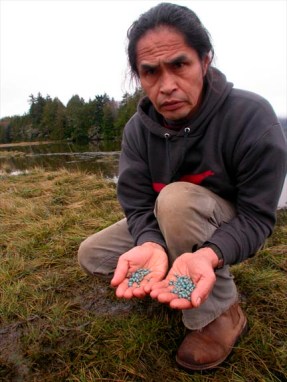 A submerged anchor was found near Tofino in 2003, which almost certainly came from the Tonquin. While to the Americans, the disappearance of the Tonquin remained a mystery for nearly two centuries, Tla-o-qui-aht have always known where the ship sank: that knowledge was preserved in their families’ oral histories. Not only was the anchor found right where Tla-o-qui-aht claim the ship sank, it was encrusted with turquoise trading beads that would have been on deck (not stowed away, which they would have been if the ship was under sail when it sank) and which are of the right time period to be from the Tonquin. Here’s a photo of Joe Martin with some of the beads.
I am really excited about adding this kayak section on to our route – it makes it much more naturally complete, to include the tales of the Columbia and the Tonquin. It also closes the historical investigation part of this project much more sensibly: after the loss of the Tonquin in 1811, European and American explorers and traders avoided this stretch of coast for the next half century. So it completes our journey really well, and it also really defines the historical period we are exploring as 1774-1811.
 A bunch of stuff has come up – ranging from a knee injury on my end, and an old dog that we just don’t feel good about leaving alone for so long (she’s been a really good dog… we can’t NOT be around if something happens!) and a few other personal things, it’s just not going to happen this year.
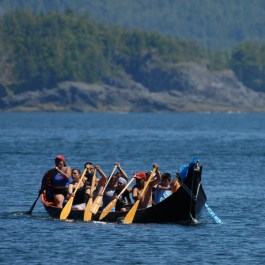 Changes in sea level over time make it difficult to know exactly when the Nuu-chah-nulth ancestors first arrived, because rising seas in the past have obliterated the older deposits. They most likely arrived here well over 13,000 years ago, either by canoes or some other watercraft, along the coast from Siberia and beyond.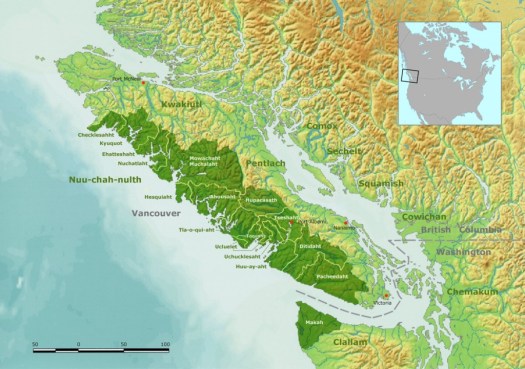
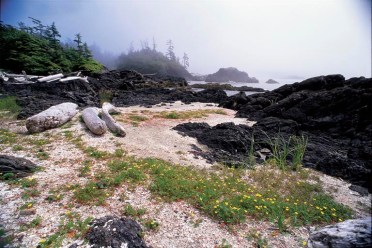 Welcome to the new website for The Secret Coast 2018 – a 24-day expedition along the outer coast of northern Vancouver Island. We aim to be the first people to hike the three coastal routes: the Tatchu Peninsula, Nootka Island, and the Hesquiaht Peninsula, as a single non-stop journey.
 Vancouver Island's Secret Coast